


Burn more body fat does not require a “fat-burning” drink, extreme diet, or exhausting workout every day. Sustainable fat loss comes from creating a consistent energy deficit while maintaining healthy eating habits, regular movement, adequate sleep, and strength training.
The good news is that small daily habits can make this process easier. Walking more, eating enough protein and fiber, reducing liquid calories, and building muscle-friendly workouts can all support healthier weight management.
Here are seven practical ways to increase daily energy expenditure and support fat loss naturally—without relying on gimmicks or extreme restrictions.

1. Walk More Throughout the Day
Walking is one of the simplest ways to increase daily physical activity without requiring special equipment or a gym membership.
Your total daily movement includes much more than formal workouts. Walking to the store, taking the stairs, doing household chores, or taking short walking breaks at work can all contribute to your overall activity level.
Research-based guidance from the National Institute of Diabetes and Digestive and Kidney Diseases (NIDDK) recommends gradually working toward at least 150 minutes of moderate-intensity aerobic activity each week. For some people trying to lose weight and maintain that loss, more activity may be needed.
Try this simple approach
Instead of trying to complete one long workout, add movement throughout your day:
- Take a 10–15 minute walk after a meal.
- Use stairs when practical.
- Walk while talking on the phone.
- Park farther away from your destination.
- Take short movement breaks during long periods of sitting.
You do not need to make every walk intense. The goal is to make regular movement part of your normal routine.
2. Add Strength Training to Your Week
If your goal is to lose fat while maintaining a strong body, strength training deserves a place in your routine.
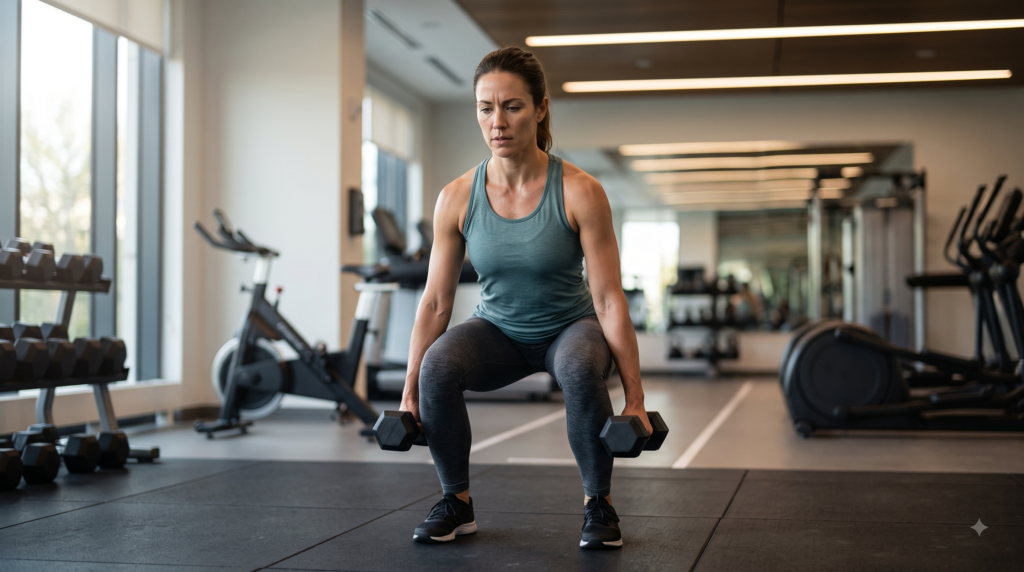
Resistance exercises such as squats, lunges, push-ups, rows, and weight training challenge your muscles. During weight loss, this can be particularly useful because losing weight does not automatically mean losing only body fat.
A recent systematic review and meta-analysis found that adding resistance exercise during diet-induced weight loss helped protect fat-free mass, increased fat-mass loss, and improved muscular strength compared with dietary restriction alone.
You do not need to lift heavy weights
Beginners can start with bodyweight exercises or light resistance.
A simple full-body session might include:
- Squats
- Push-ups
- Glute bridges
- Rows with resistance bands
- Lunges
- Planks
Aim for consistent training rather than trying to destroy yourself in every session.
For general health, adults are advised to perform muscle-strengthening activities on at least two days per week.
3. Prioritize Protein and High-Fiber Foods
What you eat matters because fat loss ultimately depends on your overall energy balance.
Eating nutritious foods can make it easier to control calories without constantly feeling hungry. Protein-rich foods and fiber-rich foods can be particularly useful components of a balanced eating pattern.
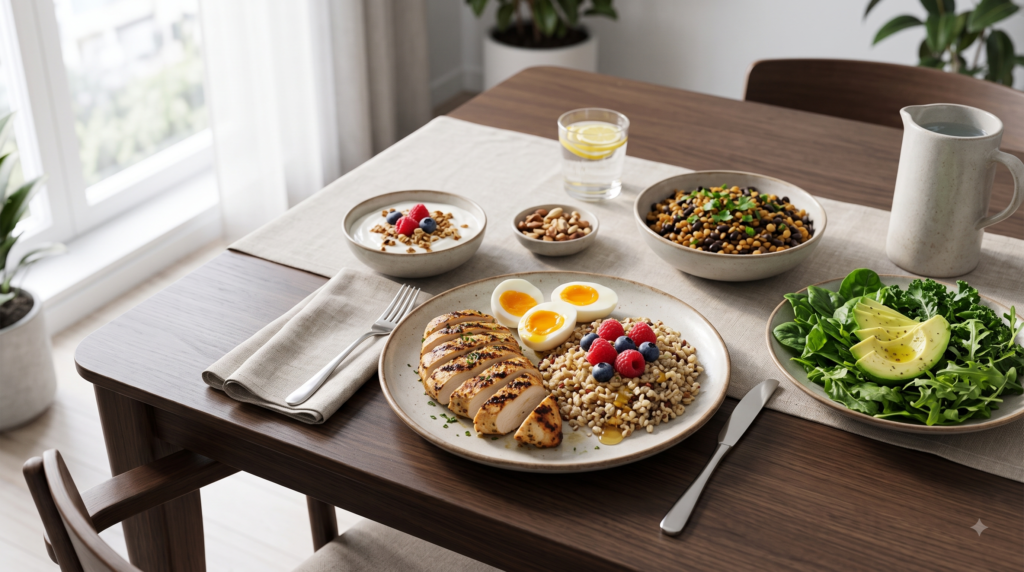
Good protein choices include:
- Eggs
- Greek yogurt
- Fish
- Chicken
- Beans
- Lentils
- Cottage cheese
- Tofu
For fiber, focus on foods such as vegetables, fruits, beans, lentils, whole grains, nuts, and seeds.
You do not need to eliminate carbohydrates or fats to lose body fat. The NIDDK notes that foods such as whole grains can be part of a healthy eating plan, while total calorie intake still matters for weight loss.
Build meals around whole foods
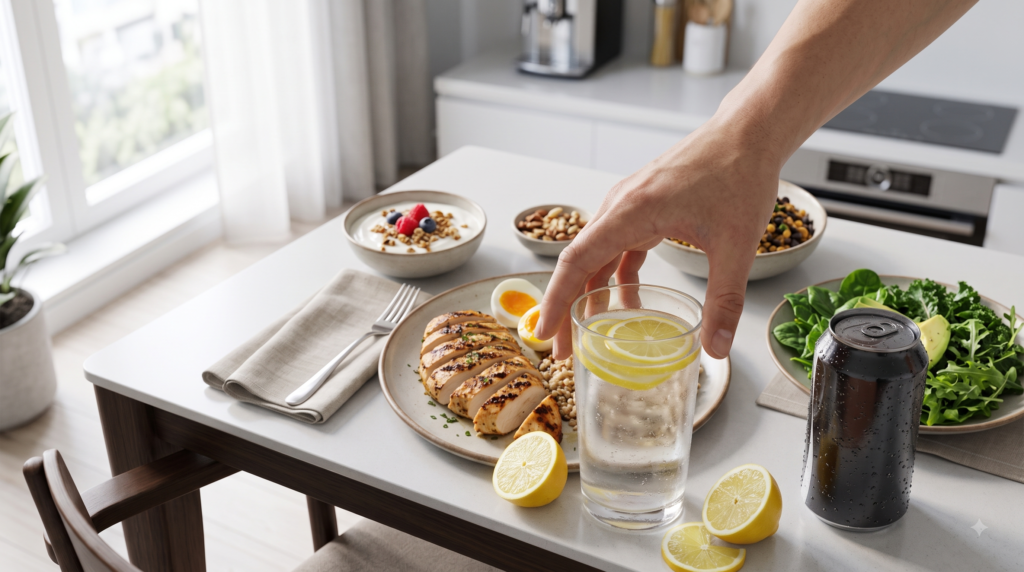
A practical meal can include a protein source, vegetables or fruit, a high-fiber carbohydrate, and a moderate amount of healthy fat.This approach is usually easier to maintain than cutting out entire food groups.
4. Replace Sugary Drinks With Lower-Calorie Options
Liquid calories can add up quickly because drinks often provide less fullness than solid foods.
Regular soda, sweetened coffee drinks, energy drinks, and other sugary beverages can contribute significant calories to your daily intake.
Replacing some of these drinks with water, sparkling water, unsweetened tea, or another low-calorie option can be a simple way to reduce calorie intake without changing your entire diet.
The CDC recommends paying attention to calories while maintaining adequate nutrition and notes that physical activity combined with reducing calorie intake can support weight loss.
You do not have to completely ban your favorite drinks. Start by replacing one sugary drink per day and build from there.

5. Get Enough Sleep Every Night
Sleep may not feel like a fat-burning activity, but it plays an important role in healthy weight management.
Adults generally need at least seven hours of sleep per night. The CDC also identifies insufficient sleep as a factor associated with obesity and other health problems.
Poor sleep can also make healthy habits harder to maintain. When you are tired, preparing balanced meals, exercising, and controlling cravings may become more difficult.
Improve your sleep routine
Try to:
- Go to bed and wake up around the same time.
- Reduce electronic-device use before bed.
- Avoid caffeine late in the day.
- Keep your bedroom comfortable and quiet.
- Exercise regularly during the day.
Sleep alone will not cause significant fat loss, but good sleep can support the behaviors that make sustainable weight management easier.

6. Create a Small, Sustainable Calorie Deficit
This is the most important point to understand about natural fat loss.
Your body stores energy in the form of body fat, and reducing body fat generally requires your body to use more energy than it receives from food and drinks over time.
That does not mean you should dramatically cut calories.
Extreme restriction can make a diet difficult to follow and may leave you tired, hungry, and more likely to abandon the plan. Instead, make modest changes that you can maintain.
For example, you could:
- Reduce oversized portions.
- Eat more vegetables with meals.
- Choose water instead of sugary drinks.
- Limit frequent high-calorie snacks.
- Cook more meals at home.
- Keep high-calorie foods in smaller portions.
- Increase your daily walking.
The CDC recommends gradual, sustainable weight loss rather than trying to lose weight extremely quickly.

7. Reduce Long Periods of Sitting
You can exercise regularly and still spend much of the day sitting.
Breaking up long periods of inactivity is a simple way to increase daily movement. Even short activity breaks can add up over time.
For example, if you work at a desk, stand up regularly, walk around the room, take a short walk during a break, or use the stairs when possible. The NIDDK specifically recommends reducing screen time and sitting and finding simple ways to add movement to the day.
Think of your daily activity as more than your workout. A 45-minute gym session is useful, but what you do during the other 15 hours you are awake can also influence your total activity level.
Why consistency matters more than a “fat-burning” trick
There is no single food, drink, exercise, or supplement that automatically melts body fat.
Instead, fat loss is influenced by your overall eating pattern, activity, sleep, genetics, medications, medical conditions, stress, and other lifestyle factors.
That is why simple habits often outperform extreme strategies over the long term.
Can You Burn More Fat Without Exercising?
You can increase your daily energy expenditure without doing traditional workouts by becoming more physically active throughout the day.
Walking, climbing stairs, household tasks, standing more, and taking movement breaks can all contribute to your overall activity.
However, exercise still provides important health benefits beyond calories burned. Regular physical activity can improve cardiovascular health, strength, sleep, mood, and overall physical function.
So rather than choosing between exercise and daily movement, combine both.
What About Fasted Cardio or “Fat-Burning” Foods?
You do not need fasted cardio, special teas, detox drinks, or particular foods to lose body fat.
Some strategies may temporarily change which fuel your body uses during exercise, but that does not automatically translate into greater long-term fat loss.
Similarly, no ordinary food can selectively “burn belly fat.”
A sustainable eating pattern, appropriate calorie intake, regular physical activity, and adequate recovery are much more important.
How to Make These Habits Easier
Trying to change everything at once can make healthy habits difficult to maintain.
Instead, start with two or three changes.
For example:
Week 1: Walk for 15 minutes each day.
Week 2: Add two strength-training sessions.
Week 3: Replace one sugary drink with water each day.
Week 4: Set a consistent bedtime and wake-up time.
Once these habits become easier, gradually add another.
Small changes may look insignificant on a single day, but repeating them consistently can create meaningful changes over months.
Frequently Asked Questions
What is the fastest natural way to burn body fat?
There is no single fastest natural method that works for everyone. Sustainable fat loss generally comes from maintaining an appropriate calorie deficit while eating a nutritious diet and staying physically active.
Does walking help burn body fat?
Yes. Walking increases physical activity and energy expenditure. Regular walking can support weight management, particularly when combined with appropriate nutrition.
Can strength training help with fat loss?
Yes. Strength training can help improve body composition and preserve lean mass during weight loss. Recent evidence supports including resistance exercise alongside dietary changes when appropriate.
Does sleeping more help you lose fat?
Getting enough sleep supports healthy weight management, although sleep alone does not guarantee fat loss. Most adults should aim for at least seven hours of sleep each night.
Do I need to stop eating carbohydrates to lose fat?
No. Carbohydrates do not automatically cause fat gain. Whole grains, fruits, vegetables, and other carbohydrate-containing foods can be part of a healthy eating pattern. Overall calorie intake and dietary quality matter more than eliminating carbohydrates completely.
Can I specifically burn belly fat?
You cannot reliably choose where your body loses fat first. Exercises can strengthen abdominal muscles, but reducing overall body fat is what can eventually reduce abdominal fat.
How much exercise should I do for fat loss?
A common starting target for adults is at least 150 minutes of moderate-intensity aerobic activity each week, plus muscle-strengthening activity on at least two days. Some people may benefit from more activity for weight management.
Conclusion
The best way to burn more body fat naturally is not to search for a miracle fat-burning trick. Focus on habits that increase daily movement, support healthy eating, preserve muscle, and make your routine easier to maintain.
Start by walking more, strength training regularly, choosing filling nutritious foods, limiting unnecessary liquid calories, reducing long periods of sitting, and getting enough sleep. Most importantly, give the process time. Sustainable fat loss is usually the result of consistent habits rather than extreme methods.
 Maqsooda Manzoor